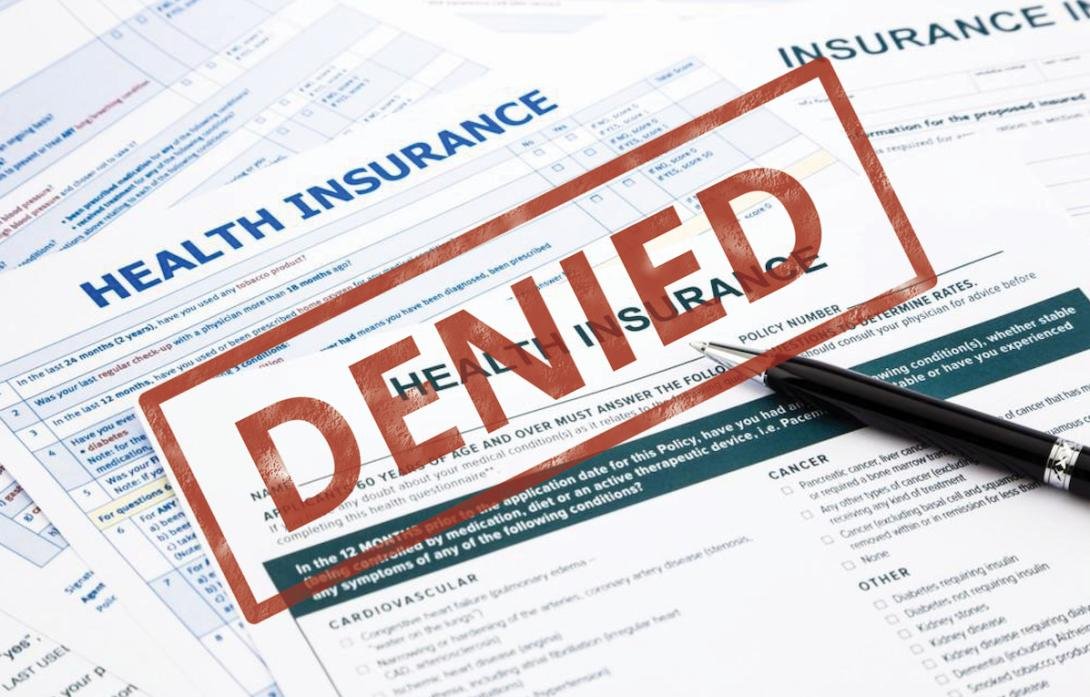
Can You Get Denied Health Insurance Because of Debt Collection?
If you’ve ever gotten a call from a debt collector about an old medical bill while also needing to sign up for health insurance, you’ve probably wondered whether the two are connected — whether an insurer could somehow see that debt and use it against you. It’s a reasonable question, especially given how much of American healthcare seems to run on fear of exactly this kind of financial punishment. The good news is that, for the large majority of Americans, the honest answer is no — but “no” comes with enough real exceptions, nuances, and adjacent risks that it deserves a full, careful explanation rather than a one-word reassurance.
This article walks through exactly what protects you, where debt collection and health insurance genuinely can intersect, what’s changed in the medical debt and credit reporting landscape through 2026, and what to actually do if you’re facing both a debt collector and an insurance application at the same time.
1. The Short Answer
No, you cannot be denied ACA-compliant health insurance — Marketplace coverage, most employer-sponsored plans, or Medicaid — because of medical debt, debt collection activity, or any other financial history. Federal law requires these plans to be sold on a guaranteed issue basis, meaning insurers cannot consider your financial history, credit report, or debt collection status when deciding whether to cover you or how much to charge you.
That said, there are real, adjacent risks worth understanding clearly:
- Non-ACA products like short-term health plans, health sharing ministries, and some supplemental coverage can still deny you based on health history, and debt collection can sometimes surface information relevant to that history
- Debt collection related to unpaid premiums can cause you to lose coverage you already have, which is a different mechanism than being denied new coverage
- Medical debt can still affect your credit report under certain conditions, and that credit report can matter for other insurance types (auto, home) even though it doesn’t matter for health insurance
- A hospital or provider (not an insurer) can, in some circumstances and some states, restrict future non-emergency care over unpaid bills, which is a separate issue from insurance denial entirely
Understanding these distinctions is the key to knowing exactly what you’re protected from and what you should still watch out for.
2. Why This Fear Exists in the First Place
This isn’t an irrational fear — it’s rooted in real history. Before the Affordable Care Act took effect in 2014, health insurers in the individual market could and did deny coverage, exclude specific conditions, or charge dramatically higher premiums based on an applicant’s health history and, in some cases, financial indicators associated with poor health, including medical debt. Pre-ACA underwriting sometimes treated a pattern of unpaid medical bills as a proxy signal for chronic illness or high future claims risk, even without directly asking about debt on the application.
The ACA fundamentally rebuilt the rules for this specific category of insurance, and it’s been in place for over a decade now — but the memory and general cultural anxiety about “getting punished by insurers for being sick or in debt” persists, understandably, especially since other financial products (loans, some insurance types, even some landlords) do still consider credit and debt history in ways that reinforce the general sense that debt follows you everywhere.
It’s also worth noting that roughly 1 in 10 U.S. adults currently carry medical debt, and millions of them owe more than $10,000, according to ongoing KFF tracking — meaning this isn’t a niche worry. It’s a question a meaningful share of the population has genuine reason to ask.
3. The Legal Wall Between Debt Collection and Health Insurance Underwriting
Three separate legal protections work together to build what’s effectively a wall between your debt collection history and your ACA health insurance status.
Guaranteed issue. All ACA-compliant health plans must be sold on a guaranteed issue basis. Insurers cannot deny you a policy because of your health status, medical history, or financial history connected to health, including unpaid medical bills or active debt collection.
Community rating. Premiums for ACA-compliant plans can only vary based on age, geographic location, and tobacco use. There is no field on a Marketplace or ACA-compliant application asking about your debt, your credit score, or your collection history, and even if there were, insurers are legally barred from using it to set your price.
No consideration of pre-existing conditions. Insurers cannot deny claims or exclude coverage for treatment of a pre-existing condition, and this protection extends to the underlying health event, not just whether you disclosed it.
None of these three protections carve out an exception for debt collection status. They’re written broadly enough to cover financial history connected to health generally, which is precisely the category medical debt and its associated collection activity falls into.
4. What “Guaranteed Issue” Actually Guarantees
It’s worth being precise about what “guaranteed issue” means in practice, since the term gets used casually but has a specific legal meaning.
Guaranteed issue means an insurer offering ACA-compliant coverage must accept every applicant who applies during an eligible enrollment period (open enrollment or a qualifying special enrollment period), regardless of:
- Current or past health conditions
- Medical history, including surgeries, chronic illness, or mental health treatment
- Genetic information
- Disability status
- Financial history related to health care, including unpaid medical bills and active collections
- Prior insurance claims history
The insurer cannot ask about any of this on the application in a way that affects your eligibility or price, and even in the rare case where an insurer somehow learned about your debt collection status through some other channel, using that information to deny or price your coverage would be a direct violation of federal law.
What guaranteed issue does not guarantee: it doesn’t guarantee you a specific price you can necessarily afford, and it doesn’t apply outside the ACA-compliant plan category — a distinction covered in detail below.
5. Where Health Insurance Types Diverge: ACA Plans vs. Everything Else
This is the most important distinction to understand, because “health insurance” gets used as an umbrella term for products that are regulated in completely different ways.
Fully protected (guaranteed issue applies)
- ACA Marketplace plans (individual and family)
- Off-exchange ACA-compliant individual plans
- Employer-sponsored group health plans (protected under both HIPAA and the ACA)
- Medicaid
- Medicare Advantage during initial enrollment periods
- CHIP (Children’s Health Insurance Program)
Not protected by ACA guaranteed issue rules
- Short-term, limited-duration health insurance plans
- Health care sharing ministries
- Some grandfathered plans that predate 2010
- Fixed-indemnity and other limited-benefit plans
- Medigap policies purchased outside your guaranteed-issue window
- Supplemental voluntary benefits above a guaranteed-issue threshold offered through an employer (like large amounts of supplemental life insurance, though this isn’t health insurance in the strict sense)
If you’re applying for anything in the first category, your debt collection history is legally irrelevant to your eligibility and price. If you’re applying for anything in the second category, medical underwriting can legally occur, and while debt collection status itself still isn’t typically asked about directly, the underlying health history that generated the debt can be relevant, and application questions can sometimes surface it.
6. Can a Debt Collector Contact Your Insurance Company?
This is a specific, practical fear worth addressing directly: no, a debt collector has no legal mechanism to contact your health insurer about your debt, and even if they attempted to, there’s no reason an insurer’s underwriting or renewal process would incorporate that outreach, since ACA guaranteed issue rules make financial history irrelevant to your health coverage regardless of who’s providing that information.
Debt collectors are permitted to contact certain third parties in very limited circumstances — primarily to locate you if they’ve lost your current contact information (this is called “skip tracing”) — but even then, the Fair Debt Collection Practices Act (FDCPA) strictly limits what they can say to a third party. A collector generally cannot disclose that you owe a debt to anyone other than you, your spouse, or your attorney, without your permission. Reaching out to your health insurer to report a debt would not be a legitimate collection tactic and would likely violate the FDCPA if it happened.
There’s also no data pipeline connecting debt collection agencies to health insurance underwriting systems the way there is, for example, between credit bureaus and lenders. Health insurers evaluating ACA-compliant applications aren’t pulling credit reports or debt collection records as part of the process at all, since doing so would be pointless (the information can’t legally affect the outcome) and would create unnecessary compliance risk for the insurer.
7. Medical Debt and Credit Reports in 2026: The Full Picture
While medical debt can’t affect your health insurance, it’s worth understanding its actual current status on your credit report, since this is where a lot of confusion tends to live, and since your credit report does matter for other financial products, including some other insurance types.
The federal rule that almost changed everything
In January 2025, the CFPB finalized a rule that would have banned virtually all medical debt from consumer credit reports and prohibited lenders from using medical debt information in credit decisions. That rule never took effect. In July 2025, a federal court in the Eastern District of Texas vacated the rule entirely, ruling that the CFPB had exceeded its authority under the Fair Credit Reporting Act. Notably, the CFPB itself, under new leadership following a change in administration, joined the plaintiffs in asking the court to strike the rule down. As of 2026, there is no federal ban on medical debt appearing on credit reports.
What’s still protecting consumers nationally
Separate from the failed federal rule, the three major credit bureaus (Equifax, Experian, and TransUnion) made voluntary changes to their own reporting practices starting in 2022 that remain in effect as of 2026:
- Paid medical collections are removed from credit reports entirely, regardless of the original balance
- Medical collections under $500 are not reported, whether paid or unpaid
- Unpaid medical debt has a 12-month waiting period before it can appear on your report at all, giving you a full year to resolve billing disputes, appeal insurance denials, or negotiate a payment plan before it touches your credit
What scoring models actually count
Even when an unpaid medical collection over $500 does appear on your report after the waiting period, its actual impact depends heavily on which credit scoring model is being used:
- FICO 8, still widely used by many lenders, continues to count unpaid medical collections over $500 as a negative factor, and a large medical collection can suppress a FICO 8 score by roughly 25-50 points depending on the balance and the rest of your credit file
- FICO 9 and FICO 10/10T completely exclude medical collections from the score calculation
- VantageScore 4.0 also excludes medical collections from its calculation
This means the same unpaid medical debt can have a real effect on one credit decision (say, a mortgage lender using FICO 8) and zero effect on another (a lender using a newer scoring model), which is part of why “does medical debt affect my credit” doesn’t have a single universal answer.
State-level protections, and the ongoing legal fight over them
Fifteen states have passed their own laws restricting or banning medical debt from appearing on credit reports: California, Colorado, Connecticut, Delaware, Illinois, Maine, Maryland, Minnesota, New Jersey, New York, Oregon, Rhode Island, Vermont, Virginia, and Washington. If you live in one of these states, medical debt generally cannot legally appear on your credit report under state law, regardless of the federal rule’s failure.
However, this protection isn’t fully settled either. In October 2025, the CFPB issued a separate interpretive rule arguing that the Fair Credit Reporting Act preempts these state laws, a position consumer advocates strongly dispute. As of 2026, no court has actually ruled that state medical debt protections are preempted, and debt collection industry groups have begun legal challenges targeting individual state laws, with Colorado reportedly the first target. If you live in one of these fifteen states, your protection is currently real and enforceable, but it’s worth staying aware that this is an active legal area that could shift.
None of this — the federal rule’s failure, the state law uncertainty, or the scoring model differences — has any bearing on ACA health insurance eligibility or pricing. This entire credit reporting discussion is relevant to your credit score, and by extension to loans, some insurance lines, and other credit decisions, but it operates in a completely separate regulatory universe from health insurance guaranteed issue rules.
8. Does a Credit Check Happen When You Apply for Health Insurance?
For ACA-compliant plans, no. Applications for Marketplace coverage, off-exchange ACA plans, and enrollment in employer group plans do not involve a credit check as part of the underwriting or approval process, because there’s no underwriting decision for a credit check to inform — coverage is guaranteed regardless of what a credit check would show.
The only places you might reasonably encounter a credit check adjacent to health coverage are:
- Identity verification during Marketplace application, which may involve a “soft” credit-related identity check to confirm you are who you say you are, similar to identity verification used across many online services — this is not an underwriting credit check and doesn’t affect your score or your coverage eligibility
- Premium financing arrangements in rare cases where an employer or broker offers financed payment options for premiums, which is uncommon and separate from the coverage decision itself
- Non-ACA products like some short-term plans or supplemental insurance, which occasionally do incorporate credit-related information as part of a broader risk assessment, though this varies significantly by product and insurer
9. Can You Be Denied Care (Not Coverage) Because of Unpaid Bills?
This is a genuinely different question from insurance denial, and it deserves its own section because it’s a real, documented issue that sometimes gets conflated with insurance denial in people’s minds.
Insurance denial means an insurer refuses to cover you or refuses to pay for a specific claim. Care denial means a healthcare provider (a hospital, clinic, or individual doctor) refuses to schedule or provide non-emergency treatment because of an unpaid balance.
These are legally and practically distinct, and while insurers cannot deny ACA-compliant coverage over medical debt, providers in most states retain some ability to decline non-emergency, non-life-threatening care to patients with significant unpaid balances, subject to certain limits.
Important protections that apply regardless of debt:
- Under the Emergency Medical Treatment and Labor Act (EMTALA), hospitals with emergency departments must provide emergency stabilizing treatment to anyone who needs it, regardless of ability to pay or outstanding debt
- The No Surprises Act protects patients from certain unexpected out-of-network bills, particularly for emergency care and some situations at in-network facilities
Where the line gets blurrier: Some states have gone further. Minnesota, for example, passed a law specifically prohibiting healthcare providers from denying non-emergency care to patients solely because of unpaid medical bills. Other states have restricted the ability of hospitals to pursue aggressive collection tactics (like wage garnishment) against patients with unpaid medical debt. But absent a specific state law like Minnesota’s, providers in many states retain some discretion to decline to schedule future non-emergency appointments for patients with substantial unpaid balances, similar to how many types of professional service providers can decline to take on new work from a client who owes them money.
This is worth flagging clearly: it’s a real, if narrower, risk — but it’s about access to a specific provider’s non-emergency services, not about your insurance coverage itself.
10. The Real Risk: Losing Coverage You Already Have
If there’s one genuine insurance risk connected to debt that deserves real attention, it’s this one, and it’s worth being precise about the mechanism, because it’s often confused with the “denied for debt collection” fear.
You can lose health insurance coverage if you stop paying your premiums — but this is fundamentally different from being denied coverage because of unrelated debt collection activity. If you fall behind specifically on your health insurance premium (not an unrelated credit card or medical bill), your coverage can lapse after your plan’s grace period expires, which is commonly around 30 days for most ACA Marketplace enrollees and can extend up to 90 days for those receiving premium tax credits.
This is worth separating clearly from the debt collection fear: an old, unpaid medical bill sitting with a collection agency has zero bearing on your current health insurance status, as long as you continue paying your current premium. The two are unconnected financial obligations, and only nonpayment of the premium itself threatens the coverage tied to that premium.
11. Medicaid, Medicare, and Debt Collection
Medicaid eligibility is based on income and household size (and in some states, additional factors like disability status), not on debt, credit history, or debt collection activity. There is no mechanism by which unpaid medical bills or active collections could affect your Medicaid eligibility or benefits.
Original Medicare (Parts A and B) has no underwriting at all — eligibility is based on age or qualifying disability status, and debt collection has no bearing on it whatsoever.
Medicare Advantage plans are guaranteed issue during your initial enrollment period and during other qualifying enrollment windows, meaning debt collection status is irrelevant to your ability to enroll.
Medigap (Medicare Supplement) is the one Medicare-adjacent product where medical underwriting can reappear if you’re applying outside your initial 6-month open enrollment window or a guaranteed-issue trial right period. Even here, though, insurers are evaluating health history, not debt collection status directly — the connection, if any, would be indirect, through a health condition that also happens to have generated medical debt, not through the debt collection activity itself.
12. Short-Term Plans and Health Sharing Ministries: The Real Exception
This is where the closest thing to a genuine risk exists, and it’s worth understanding clearly if you’re considering one of these products.
Short-term health insurance plans and health care sharing ministries are not required to follow ACA guaranteed issue rules. Applicants can be asked detailed health history questions, and insurers or ministry administrators can decline coverage, exclude specific conditions, or charge more based on that history.
While these applications typically still don’t ask directly about debt collection status, the underlying health event that generated your medical debt is exactly the kind of thing these applications do ask about. If your medical debt originated from a chronic condition, a major surgery, or an ongoing treatment plan, a short-term plan or health sharing ministry application could legitimately deny you or exclude that condition — not because of the debt itself, but because of the health history the debt is connected to.
People most likely to encounter this scenario are those between jobs, waiting out an ACA enrollment window, or self-employed and shopping outside the Marketplace who turn to a short-term plan as a stopgap. If you’re in this situation and carrying medical debt tied to an ongoing condition, it’s worth strongly considering whether you qualify for a Marketplace special enrollment period instead, since that route sidesteps this entire category of risk.
13. What Debt Collectors Can and Cannot Legally Do
Understanding your rights under debt collection law helps clarify what a collector can actually threaten you with — and what’s simply not true, even if a collector implies otherwise.
Collectors CAN:
- Contact you by phone, mail, or (with some restrictions) email or text about a legitimate debt
- Report the debt to credit bureaus, subject to the timing and threshold rules covered above
- Pursue legal action, including suing you for the debt, which could eventually result in a judgment and, depending on your state, wage garnishment or a bank account levy
- Contact your employer only to verify your employment, not to discuss the debt itself
Collectors CANNOT, under the Fair Debt Collection Practices Act:
- Contact you at unreasonable hours (generally before 8 a.m. or after 9 p.m)
- Threaten actions they don’t intend to or legally can’t take
- Falsely claim you’ll be arrested for not paying a debt
- Disclose your debt to your employer, friends, family, or neighbors, beyond limited location-finding purposes
- Continue contacting you after you’ve sent a written request to stop, other than to confirm they’ve received it or to notify you of specific legal actions
- Claim or imply that your insurance coverage will be affected by the debt — this would be a false or misleading representation prohibited under the FDCPA
If a debt collector ever tells you, directly or by implication, that your health insurance will be denied or canceled because of the debt they’re collecting, that statement itself is likely a violation of federal law, and it’s worth documenting exactly what was said and reporting it to the Consumer Financial Protection Bureau or your state attorney general’s office.
14. Your Rights Under the FDCPA and the No Surprises Act
The Fair Debt Collection Practices Act (FDCPA) governs how third-party debt collectors (not original creditors, though many states extend similar protections to original creditors too) can pursue you. Key rights include the ability to request debt validation in writing, the ability to dispute a debt you don’t believe you owe, and protection from harassment, false statements, and unfair practices.
The No Surprises Act, effective since 2022, protects patients from certain unexpected medical bills, particularly balance billing for emergency services and for certain services received at in-network facilities from out-of-network providers without adequate advance notice. If a medical bill that’s now in collections originated from a situation the No Surprises Act should have covered, you may have grounds to dispute the underlying bill itself, not just the collection activity around it, which is worth pursuing before assuming the debt is valid and payable as billed.
Practical combination of these rights: If you’re dealing with a medical bill sent to collections, it’s worth checking both whether the original charge was legitimate (No Surprises Act, insurance appeal rights, billing error rates — industry analyses suggest a significant share of medical bills contain at least one error) and whether the collector’s tactics are lawful (FDCPA), before assuming you simply have to pay whatever amount is being pursued.
15. What to Do If You’re Facing Medical Debt Collection and Need Coverage
Step 1: Apply for ACA-compliant coverage without hesitation. Your debt collection status has no bearing on your eligibility or pricing for Marketplace, employer-sponsored, or Medicaid coverage. Don’t delay applying for coverage out of fear connected to unrelated debt.
Step 2: Separately, address the debt itself on its own timeline. Since the two issues are legally unconnected, you don’t need to resolve the debt before securing coverage, and you shouldn’t let debt collection stress delay getting insured, especially if you’re currently uninsured and accumulating new medical risk in the meantime.
Step 3: Review the original bill for accuracy. Given documented error rates in medical billing, it’s worth requesting an itemized bill and comparing it against your Explanation of Benefits (EOB) before assuming the collection amount is fully accurate.
Step 4: Request debt validation in writing if a collector contacts you, which is your right under the FDCPA and forces them to confirm the debt is legitimate and accurately calculated before continuing collection efforts.
Step 5: Check whether you qualify for financial assistance or charity care. Many hospitals, particularly nonprofit ones, are required to offer financial assistance programs, and some medical debt currently in collections may be eligible for retroactive forgiveness or reduction if you didn’t know these programs existed at the time of treatment.
Step 6: If the debt is accurate and you can’t pay it in full, consider a payment plan directly with the provider or a formal debt relief option, understanding that neither choice will affect your ACA health insurance eligibility either way.
16. How to Dispute a Medical Collection That Shouldn’t Be There
If a medical collection has appeared on your credit report and you believe it shouldn’t have — because it’s under $500, because it’s less than 12 months old, because it’s already paid, or because you live in a state with additional protections — you have the right to dispute it.
- Pull your credit reports from all three bureaus through the free weekly reports available to all consumers
- Identify the specific medical collection entry and check it against the current bureau rules: is it under $500 (should be removed), already paid (should be removed), or under 12 months old (shouldn’t be reported yet)
- File a dispute directly with each credit bureau reporting the item, in writing, explaining specifically why the entry violates current reporting standards
- If you live in one of the fifteen states with medical debt credit reporting laws, cite your specific state law in the dispute as additional grounds for removal
- Follow up in writing if the dispute isn’t resolved within the standard 30-day investigation window bureaus are required to follow under the Fair Credit Reporting Act
17. State-by-State: Where You Have Extra Protection
If you live in California, Colorado, Connecticut, Delaware, Illinois, Maine, Maryland, Minnesota, New Jersey, New York, Oregon, Rhode Island, Vermont, Virginia, or Washington, your state has passed its own law restricting or banning medical debt from appearing on credit reports, offering protection beyond the voluntary national bureau changes. Minnesota has gone further still, specifically prohibiting healthcare providers from denying non-emergency care over unpaid bills.
If you live outside these states, you still benefit from the voluntary bureau protections (paid collections removed, sub-$500 collections excluded, 12-month reporting delay) and from ACA guaranteed issue protections for health insurance specifically, but you don’t have the additional state-level credit reporting layer these fifteen states provide.
Regardless of which state you’re in, ACA health insurance guaranteed issue protections are federal and apply uniformly nationwide.
18. Comparison Table: What Debt Collection Can and Cannot Affect
| Area | Can Medical Debt Collection Affect This? | Why |
| ACA Marketplace health insurance eligibility | No | Guaranteed issue is federal law |
| ACA Marketplace health insurance pricing | No | Community rating prohibits financial-history-based pricing |
| Employer group health plan eligibility | No | Protected under HIPAA and the ACA |
| Medicaid eligibility | No | Based on income/household size only |
| Short-term health plan eligibility | Indirectly, via underlying health history | Not ACA-protected; medical underwriting allowed |
| Credit score | Sometimes | Depends on amount, age, payment status, state, and scoring model used |
| Auto/home insurance premium | Indirectly, in most states | Via credit-based insurance score, if reported to bureau |
| Non-emergency care from the same provider | Sometimes, depending on state | Providers can restrict future non-emergency scheduling in some states absent laws like Minnesota’s |
| Emergency care | No | EMTALA requires stabilizing treatment regardless of ability to pay |
| Life or disability insurance underwriting | Indirectly, via disclosed health history | Not ACA-protected; full medical underwriting applies |
19. Frequently Asked Questions
Can a health insurance company see my debt collection history when I apply? For ACA-compliant plans, there’s no mechanism or reason for them to check, since financial history is legally irrelevant to guaranteed issue coverage. Applications don’t ask about debt or collections, and insurers don’t pull credit reports as part of ACA underwriting.
Will unpaid medical bills prevent me from enrolling in Medicaid? No. Medicaid eligibility is based on income and household size, not on debt, credit history, or collection status.
Can a debt collector tell my employer or my health insurance company that I owe money? No, not for the purpose of collecting a debt. The FDCPA prohibits collectors from disclosing your debt to third parties, including employers or insurers, beyond very limited circumstances related to locating you.
Is it true that medical debt no longer shows up on credit reports? Partially. Paid medical collections, collections under $500, and unpaid collections less than 12 months old don’t show up under current voluntary credit bureau policy. Unpaid collections over $500 and older than 12 months can still appear, unless you live in one of the fifteen states with additional legal protections.
Can a hospital refuse to treat me because of unpaid medical bills? For emergency care, no — EMTALA requires stabilizing treatment regardless of ability to pay. For non-emergency, future appointments, some providers in some states retain discretion to decline scheduling patients with significant unpaid balances, though a growing number of states are restricting this practice.
Does bankruptcy or debt settlement affect my health insurance eligibility? No. Neither bankruptcy nor debt settlement participation is relevant to ACA guaranteed issue health insurance eligibility or pricing.
What should I do if a debt collector threatens that my insurance will be canceled if I don’t pay? This is likely a false and prohibited statement under the FDCPA. Document exactly what was said, request everything in writing going forward, and consider filing a complaint with the Consumer Financial Protection Bureau or your state attorney general’s office.
Can old medical debt affect my ability to get life insurance later, even if it can’t affect health insurance? Indirectly, yes. Life insurance underwriters evaluate your health history directly, and if your medical debt is tied to a condition that comes up during a life insurance health questionnaire or medical records review, that health history — not the debt itself — can affect your life insurance underwriting outcome.