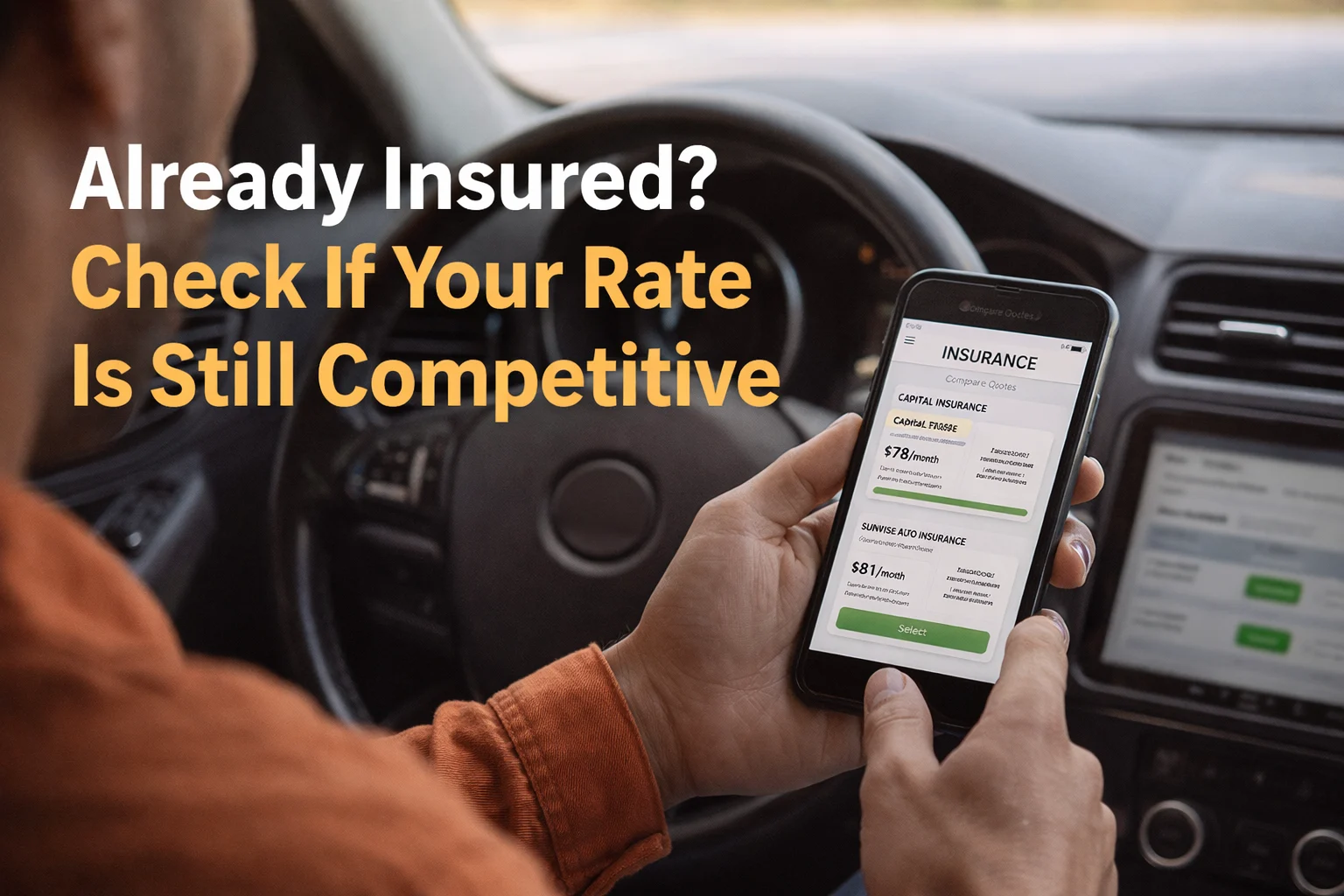
Already Insured? Here’s How to Tell If Your Car Insurance Rate Is Still Competitive
You’ve had the same car insurance for three years now. The coverage seems fine, you haven’t had any major issues, and you’re comfortable with your current provider. But here’s a question that might keep you up at night if you really think about it: Are you overpaying?
The uncomfortable truth is that many drivers are paying far more than they should for car insurance. Studies show that loyal customers often subsidize discounts offered to new customers, with some long-term policyholders paying 20 to 50 percent more than they would if they switched companies. This practice, known in the industry as price optimization or the loyalty penalty, means your insurer might be quietly increasing your rates year after year, banking on the fact that you won’t notice or won’t bother to shop around.
But how can you tell if you’re getting a competitive rate or if you’ve become a victim of the loyalty tax? This comprehensive guide will show you exactly how to evaluate your current car insurance rate and determine whether it’s time to shop around or negotiate a better deal.
Understanding What Makes an Insurance Rate Competitive
Before diving into the evaluation process, it’s important to understand what “competitive” actually means in the context of car insurance. A competitive rate isn’t necessarily the absolute cheapest option available. Instead, it’s a rate that represents fair value for your specific coverage needs, risk profile, and circumstances.
Several factors determine whether your rate is competitive. First, your rate should align with current market pricing for someone with your driver profile, vehicle type, coverage levels, and location. Insurance markets fluctuate, and a rate that was competitive three years ago might not be today.
Second, competitive rates reflect all the discounts you’re eligible for. Insurance companies offer numerous discounts, but they don’t always automatically apply them. Your rate might seem reasonable until you discover you’re missing out on hundreds of dollars in available savings.
Third, a competitive rate comes from an insurer with a solid reputation for customer service and claims handling. Paying slightly less for insurance from a company known for denying legitimate claims or providing poor service isn’t a good deal. The best rate balances cost with quality service.
Finally, competitive rates adjust appropriately based on your changing circumstances. If you’ve improved your credit, maintained a clean driving record, or made other positive changes, your rate should reflect those improvements rather than steadily increasing simply because you’re a loyal customer.
Calculate Your Cost Per Month and Per Year
The first step in evaluating your car insurance rate is getting crystal clear on what you’re actually paying. This might sound obvious, but many drivers don’t have an accurate understanding of their true insurance costs.
Pull out your most recent insurance statement and identify your total premium. If you pay monthly, multiply that amount by 12 to get your annual cost. However, be careful here because monthly payment plans often include installment fees or interest charges that can add 10 to 20 percent to your total annual cost.
Look for any additional fees on your statements. Some insurers charge policy fees, billing fees, or administrative charges that aren’t immediately obvious when you’re just glancing at your monthly payment amount. These fees can add up to $50 to $150 per year, money that could be saved by switching to a company with lower fees or by paying your premium in full.
Break down your cost by coverage type if possible. Understanding how much you’re paying for liability coverage versus comprehensive and collision coverage helps you make informed decisions about whether each component represents good value. Some insurers provide this breakdown on declarations pages or online account dashboards.
Once you have your accurate annual cost, divide it by 12 to get your true monthly cost. Then, create a simple benchmark in your mind. For example, if you’re paying $1,800 per year or $150 per month, you now have a concrete number to compare against market rates and competitor quotes.
Research Average Rates for Your Profile
Now that you know what you’re paying, it’s time to understand what you should be paying. Average car insurance rates vary dramatically based on numerous factors, so finding meaningful comparison data requires some research.
Start by looking up average insurance rates for your state. Insurance costs vary significantly by location due to different state regulations, accident rates, weather patterns, and cost of living. A competitive rate in Michigan, which has historically had the highest insurance costs in the nation, looks very different from a competitive rate in Maine or Idaho, where premiums are typically much lower.
National insurance studies published by organizations like the National Association of Insurance Commissioners, J.D. Power, or major insurance comparison websites provide valuable benchmarks. These reports often break down average costs by state, age group, vehicle type, and coverage level. While your individual circumstances might differ, these averages give you a baseline for comparison.
Consider your specific risk factors. Young drivers, especially those under 25, pay significantly more than middle-aged drivers. Drivers with accidents or violations on their records pay substantially more than those with clean records. If you fall into a higher-risk category, expect your rate to be above average, but it should still be competitive within that category.
Your vehicle also impacts what you should expect to pay. Luxury cars, sports cars, and vehicles with high theft rates or expensive repair costs result in higher premiums. Conversely, safe, reliable vehicles with good crash test ratings and affordable repair costs should translate to lower rates.
Use online insurance calculators that estimate rates based on your specific profile. Many insurance comparison sites allow you to input your information and see estimated rates from multiple companies without committing to anything. These estimates, while not guaranteed final quotes, provide valuable insight into whether your current rate is in the ballpark of market pricing.
If you discover that you’re paying 15 to 25 percent more than the average for someone with your profile, that’s a strong signal your rate might not be competitive. Differences of 30 percent or more almost certainly indicate you should shop around.
Get Comparison Quotes from Multiple Insurers
Reading about average rates is helpful, but nothing beats actual quotes from real insurance companies. Getting comparison quotes is the most reliable way to determine if your current rate is competitive.
Plan to get quotes from at least five different insurance companies. This sample size gives you a good sense of the market without becoming overwhelming. Include a mix of large national carriers, regional insurers, and direct-to-consumer companies that operate primarily online.
Use insurance comparison websites to streamline the process. Sites like Policygenius, The Zebra, or NerdWallet allow you to enter your information once and receive multiple quotes. However, don’t rely solely on comparison sites because some insurance companies don’t participate in these platforms and must be contacted directly.
When requesting quotes, ensure you’re comparing apples to apples. Provide identical coverage levels, deductibles, and limits across all quotes. If your current policy has $100,000/$300,000 liability coverage with a $500 deductible, request those same parameters from other insurers. Comparing different coverage levels makes it impossible to accurately assess whether your rate is competitive.
Pay attention to what’s included in each quote. Some insurers automatically include extras like roadside assistance or rental reimbursement, while others offer these as optional add-ons. Make sure you’re accounting for these differences when comparing total costs.
Don’t be surprised if quotes vary significantly. It’s not uncommon to see differences of $500 to $1,500 or more per year between the highest and lowest quotes for the same coverage. Insurance companies use different risk models and algorithms, and what makes you high-risk to one company might make you an attractive customer to another.
Consider working with an independent insurance agent who represents multiple companies. These agents can quickly shop your coverage across their carrier network and often know which companies are most competitive for specific driver profiles. They’re paid by the insurance companies, not by you, so their services are typically free.
If your comparison quotes come back 20 percent or more lower than your current rate, you’ve found clear evidence that your rate isn’t competitive. Even differences of 10 to 15 percent represent substantial savings worth pursuing, potentially hundreds of dollars per year that you’re unnecessarily giving away.
Review Your Coverage and Discount Eligibility
Sometimes what appears to be an uncompetitive rate is actually a discount problem. You might be paying a fair price for the coverage you have, but missing out on discounts that would make your rate truly competitive.
Start by pulling up your current policy declarations page, which lists all the discounts currently applied to your policy. Most insurers provide this information in your online account or on paper statements. If you can’t find it, call your insurer and ask them to list every discount you’re currently receiving.
Compare this list against all available discounts the company offers. Most insurer websites have sections explaining available discounts, or customer service representatives can provide this information. The most common discounts include good driver discounts, multi-policy bundling, multi-car discounts, good student discounts, defensive driving course discounts, and vehicle safety feature discounts.
Look for discounts you’re eligible for but are not receiving. For example, if you bundle your home and auto insurance, are you getting the multi-policy discount? If you’ve installed a dashcam or your vehicle has advanced safety features like automatic emergency braking, are those reflected in your rate? If you’re a member of professional organizations like AAA or alumni associations, does your insurer offer affiliation discounts?
Pay special attention to usage-based insurance programs, also called telematics. These programs track your driving through a plug-in device or smartphone app and can provide discounts of 10 to 40 percent for safe driving habits. If you’re a careful driver who doesn’t drive much, you might be missing out on significant savings by not participating in these programs.
Consider whether your coverage levels are still appropriate. Sometimes rates seem uncompetitive because you’re paying for coverage you no longer need. If you’re carrying comprehensive and collision coverage on an older vehicle worth less than $3,000, you might be paying more in premiums and deductibles than you’d ever receive in a claim. Adjusting your coverage to match your current needs could substantially reduce your rate.
Check whether life changes have affected your eligibility for discounts. Did you recently get married, move to a safer neighborhood, pay off your car loan, or reach an age milestone like 25 or 55? Each of these changes could qualify you for new discounts that should be applied to your policy.
If you discover you’re missing discounts you qualify for, contact your insurer immediately and request they be added. Many companies won’t automatically apply new discounts when you become eligible. The discount additions might make your current rate competitive without needing to switch companies.
Check Your Insurer’s Recent Rate Change History
Insurance companies regularly adjust their rates, and understanding your insurer’s rate change patterns provides valuable context for evaluating your current rate’s competitiveness.
Review your payment history over the past three to five years. How much has your rate changed year over year? Small annual increases of 2 to 5 percent might reflect normal inflation and increasing costs in the insurance industry. However, if you’re seeing increases of 10, 15, or 20 percent annually without corresponding changes in your driving record or coverage, that’s a red flag.
Research whether your insurer has implemented broad rate increases in your state. Insurance companies must file rate changes with state regulators, and these filings are often public record. Some state insurance department websites allow you to look up recent rate filings, or news articles sometimes report on major rate increases by specific insurers.
Ask your insurer directly about rate changes. When you call customer service, explain that you’re reviewing your policy and ask whether there have been rate increases affecting your policy in recent years. Request specific information about what percentage your rate has increased and why. While individual insurers might be vague, persistence often yields useful information.
Compare your rate increases to industry averages. If national average insurance rates increased by 5 percent over the past two years, but your rate increased by 20 percent, you’re likely experiencing the loyalty penalty. This disparity suggests your insurer is taking advantage of customer retention by raising rates more aggressively for existing customers than they need to for actual cost increases.
Look for patterns in when increases occur. Some insurers implement small rate increases at every renewal, gradually eroding your rate’s competitiveness over time. This strategy, sometimes called “slow boil,” relies on customers not noticing or caring about small increases that add up to substantial overpayments over the years.
Consider your claim and violation history in relation to rate increases. If you’ve had accidents or traffic violations, rate increases are expected and don’t necessarily indicate an uncompetitive rate. However, rates should eventually decrease as incidents age off your record after three to five years. If your rates haven’t decreased after your record has cleared, that’s a sign you might be overpaying.
If your research reveals that your insurer has been aggressively raising rates, particularly for long-term customers, that’s strong evidence that your rate may no longer be competitive regardless of its historical fairness.
Evaluate the Overall Value Beyond Price
While price is the primary factor in determining if your rate is competitive, it’s not the only consideration. The overall value of your insurance policy includes factors like customer service quality, claims handling reputation, policy features, and coverage options.
Research your insurer’s customer satisfaction ratings. Organizations like J.D. Power conduct annual surveys rating insurance companies on customer satisfaction, claims satisfaction, and digital experience. If your insurer consistently ranks near the bottom in these ratings, even a seemingly competitive rate might not represent good value.
Read recent customer reviews on platforms like the Better Business Bureau, Trustpilot, or Consumer Affairs. Pay particular attention to reviews discussing claims experiences. Do customers report smooth, fair claims processes, or are there patterns of denied claims, slow payments, and poor communication? An insurer that makes filing claims difficult isn’t providing good value regardless of premium cost.
Check your insurer’s complaint ratios through the National Association of Insurance Commissioners. This data shows how many complaints each insurer receives relative to its market share. Companies with high complaint ratios compared to competitors might save you money on premiums, but cost you significantly more in frustration and hassle when you need to file a claim.
Consider the quality of customer service you’ve experienced. Can you easily reach someone when you have questions? Are representatives knowledgeable and helpful? Does the company offer convenient digital tools like mobile apps for managing your policy and filing claims? Good customer service has real value, and switching to a slightly cheaper insurer with poor service might be a false economy.
Evaluate policy features and benefits. Some insurers offer valuable features like accident forgiveness, which prevents your rate from increasing after your first at-fault accident, or new car replacement coverage, which pays to replace rather than repair your new vehicle if it’s totaled. These features might justify paying slightly more than bare-minimum coverage from a discount insurer.
Think about your overall relationship with the company. If you have multiple policies bundled with the same insurer and are receiving significant multi-policy discounts, switching your auto insurance alone might not result in overall savings. Calculate the total cost of all your policies together when evaluating competitiveness.
A truly competitive rate balances cost with service quality. If comparison shopping reveals you can save 30 percent by switching to a well-rated company with good customer reviews, that’s clearly a better value. However, if savings are marginal and your current insurer has excellent service and claims reputation, staying put might be the better choice.
Take Action Based on Your Findings
After completing your evaluation, you’ll have a clear picture of whether your car insurance rate is competitive. Now it’s time to take appropriate action based on what you’ve discovered.
If your rate is competitive and you’re satisfied with your coverage and service, congratulations. You’re in good shape. However, don’t become complacent. Set a reminder to repeat this evaluation process annually, as insurance markets change and your circumstances evolve.
If you’ve found you’re missing discounts you qualify for, contact your insurer immediately. Request that all applicable discounts be added to your policy. Be specific about which discounts you believe you qualify for and why. Most insurers will add these discounts retroactively to your current policy period, potentially resulting in immediate refunds or reduced future payments.
If comparison shopping revealed significantly lower rates elsewhere, you have leverage. Call your current insurer’s retention department and explain that you’ve received lower quotes from competitors. Be specific about the amount and which companies provided the quotes. Many insurers have retention specialists specifically empowered to match or beat competitor pricing to prevent customers from leaving. You might be surprised by how much they’re willing to negotiate rather than lose your business.
If your insurer won’t match competitive rates or you’re unsatisfied with their service, it’s time to switch. Changing insurance companies is straightforward. Select your new insurer, choose your start date, and the new company will typically handle canceling your old policy. Your previous insurer will refund any unused premium prorated to the cancellation date.
When switching, ensure there’s no gap in coverage. Your new policy should begin on the same day your old policy ends. Even a single day without insurance can result in license suspension in some states and leave you exposed to potentially devastating financial liability.
Give yourself adequate time for this process. Don’t wait until the day before your renewal to start shopping. Beginning your evaluation two to four weeks before renewal gives you time to gather quotes, negotiate with your current insurer, and make an informed decision without pressure.
Document all conversations with insurers. If companies promise certain rates or discounts, get confirmation in writing via email or through online account messages. This documentation protects you if promised discounts don’t appear on your final policy.
Maintain Competitive Rates Going Forward
Determining your rate is competitive today is valuable, but maintaining competitive rates requires ongoing vigilance. The insurance market doesn’t stand still, and neither should your approach to managing your coverage.
Make annual rate checks part of your financial routine. Set a calendar reminder for two months before your renewal date each year to begin the evaluation process. This annual check-in ensures you catch rate creep before it costs you too much and gives you time to shop around if necessary.
Keep your insurer updated on life changes that could affect your rate. Moving to a new address, getting married, finishing paying off your car loan, or reaching age milestones should all trigger notifications to your insurer. These changes often qualify you for rate reductions, but companies won’t apply them if they don’t know about them.
Revisit your coverage needs as your circumstances change. When your car ages, consider whether you still need comprehensive and collision coverage. As your financial situation improves, consider whether you should increase liability limits to better protect your assets. Appropriate coverage that matches your current situation represents the best value.
Monitor your credit score and work to improve it if necessary. Most states allow insurers to use credit-based insurance scores when setting rates, and improving your credit can lead to lower premiums. Check your credit report regularly for errors and work on paying down debt and making on-time payments.
Consider taking a defensive driving course every few years. These courses qualify you for discounts with most insurers and help you maintain safe driving habits that prevent accidents and violations. The small time investment often pays for itself many times over through premium reductions.
Avoid small claims when possible. If you have a minor accident where damage is only slightly more than your deductible, consider paying out of pocket rather than filing a claim. Each claim can increase your rates for three to five years, and the long-term cost of higher premiums might exceed the short-term benefit of the claim payout.
Stay informed about insurance industry trends. Major changes like new state regulations, the introduction of new discount programs, or the launch of new insurance companies in your market all create opportunities for savings. Reading personal finance publications or insurance news occasionally keeps you aware of developments that might affect your rates.
Build a relationship with an independent insurance agent. Even if you’re satisfied with your current coverage, maintaining contact with an agent who represents multiple companies gives you an expert resource for periodic rate checks. A quick annual call to an agent can reveal whether better options have emerged.
Conclusion
Determining whether your car insurance rate is still competitive isn’t a one-time task but an ongoing responsibility. The insurance market is dynamic, with companies constantly adjusting rates, offering new discounts, and changing their competitive positioning. Meanwhile, your own circumstances evolve through life changes, aging vehicles, and improving driving records.
The loyalty penalty is real, and insurers are counting on your inertia. They know most customers won’t bother to check if their rates remain competitive, making it profitable to gradually raise rates on long-term policyholders while offering aggressive discounts to attract new customers. Don’t let yourself become the victim of this strategy.
By following the steps outlined in this guide, you can definitively answer whether your current rate represents good value. Calculate your true costs, research market rates, gather comparison quotes, verify all applicable discounts, understand your insurer’s rate change patterns, and evaluate overall value beyond just price. This comprehensive evaluation puts you in control of your insurance spending.
If you discover your rate isn’t competitive, take action. Whether that means negotiating with your current insurer, claiming missing discounts, or switching to a better option, the effort invested in this process typically pays dividends of hundreds or even thousands of dollars over time.
Remember that the goal isn’t necessarily to have the absolute cheapest insurance but to have the best value, meaning appropriate coverage at a fair price from a company that will be there for you when you need them most. A competitive rate reflects this balance.
Make checking your insurance rate’s competitiveness an annual habit. Your future financial self will thank you for the diligence, and you’ll have the peace of mind that comes from knowing you’re not leaving money on the table through simple neglect or misplaced loyalty. Take control of your car insurance costs today, and ensure every dollar you spend is working as hard as it should to protect you and your assets.
Frequently Asked Questions (FAQs)
1. How do I know if my car insurance rate is too high?
Compare your current premium with at least three similar quotes using identical coverage. If yours is consistently higher, it is likely not competitive.
2. Does switching car insurance hurt my credit score?
No. Getting insurance quotes is considered a soft inquiry and does not affect your credit score.
3. Can I negotiate my car insurance rate without switching?
Yes. Many insurers will re-rate your policy, apply new discounts, or adjust coverage if you ask.
4. Is cheaper car insurance always better?
Not necessarily. Competitive insurance balances price, coverage quality, and claims service.
5. How much can I realistically save by shopping around?
Savings vary, but many drivers reduce premiums by 10%–30% simply by comparing and switching.
In another related article, Cheapest Auto Insurance in Virginia: Who Has the Lowest Rates in 2026?