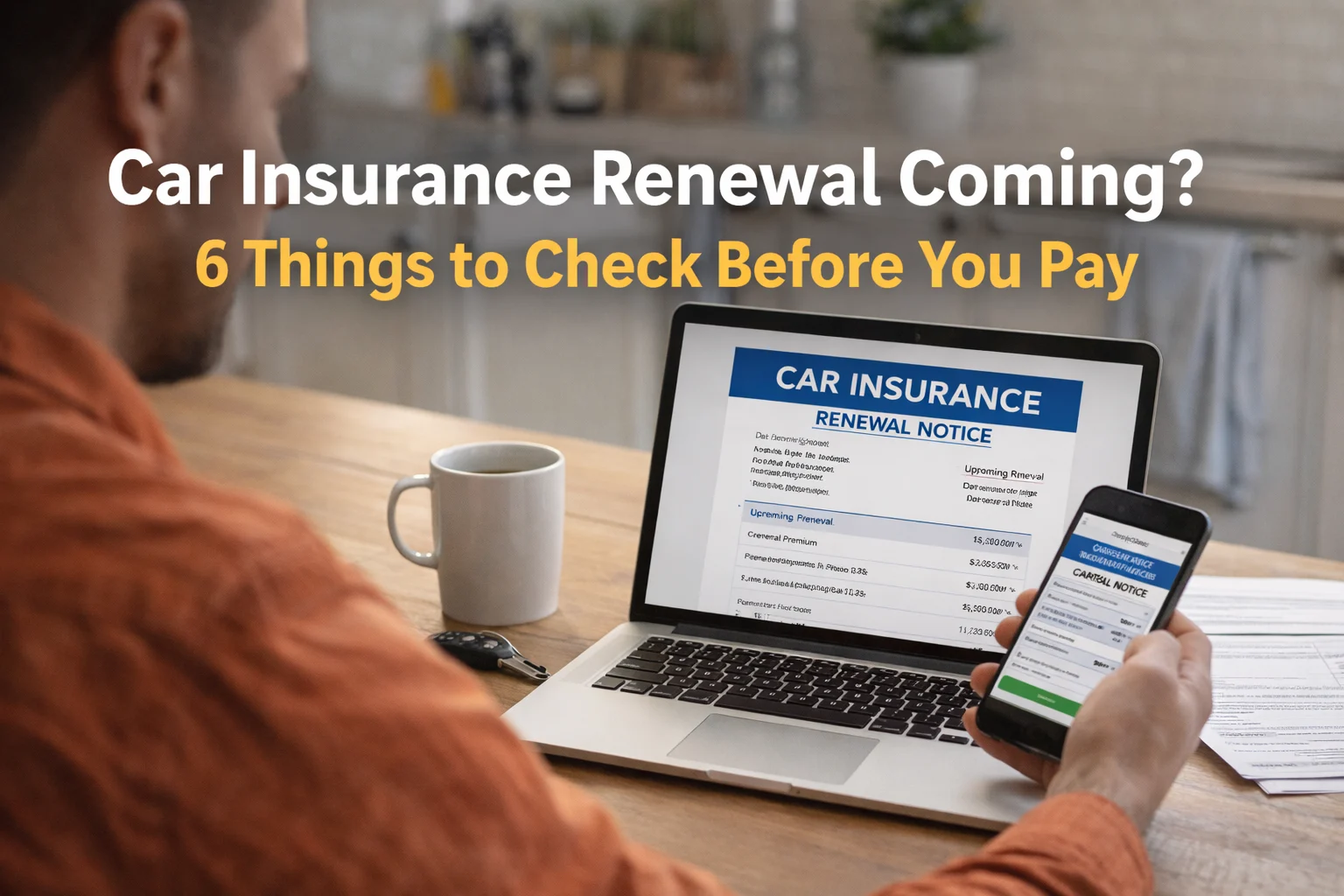
Your Car Insurance Renewal Is Coming — 6 Things to Check Before You Automatically Pay
When that car insurance renewal notice arrives in your inbox or mailbox, it’s tempting to simply click “accept” and move on with your day. After all, you’re busy, and dealing with insurance feels like just another item on an endless to-do list. But that automatic renewal could be costing you hundreds or even thousands of dollars each year.
Insurance companies are counting on your inertia. They know most customers will automatically renew without shopping around or reviewing their coverage. In fact, industry data suggests that loyal customers often pay significantly more than new customers for identical coverage. This practice, sometimes called “price optimization” or “loyalty penalty,” means the longer you stay with the same insurer without questioning your rate, the more you might be overpaying.
Before you hit that renewal button, take a moment to pause. A few hours spent reviewing your policy and exploring your options could translate into substantial savings and better coverage. Here are six critical things you need to check before automatically renewing your car insurance.
1. Compare Your Current Rate with Competitor Quotes
The single most important action you can take before renewing is to shop around and compare rates from multiple insurance companies. Insurance pricing is incredibly competitive, and rates can vary dramatically between providers for the same coverage.
Why do rates vary so much? Insurance companies use complex algorithms that weigh hundreds of factors differently. One insurer might prioritize your excellent credit score, while another focuses more heavily on your vehicle’s safety ratings. A company that gave you a great rate five years ago might no longer be the most competitive option for your current situation.
Start by gathering quotes from at least three to five different insurance companies. Many comparison websites allow you to enter your information once and receive multiple quotes, saving you time. However, also consider getting quotes directly from individual insurers, as some companies don’t participate in comparison sites and might offer competitive rates.
When comparing quotes, ensure you’re looking at identical coverage levels. It’s not a fair comparison if one quote includes comprehensive and collision coverage while another offers only liability. Pay attention to deductibles, coverage limits, and any additional benefits included in each policy.
Don’t limit yourself to online quotes either. Speaking with an independent insurance agent can be valuable, as they work with multiple carriers and can help you understand the nuances of different policies. They might know about discounts or coverage options you wouldn’t discover on your own.
Remember that the cheapest option isn’t always the best. Consider the insurer’s customer service reputation, claims handling process, and financial stability. Reading customer reviews and checking ratings from organizations like J.D. Power or the Better Business Bureau can provide insight into how the company treats policyholders, especially when filing claims.
Even if you decide to stay with your current insurer, gathering competing quotes gives you leverage. Many insurance companies will match or beat competitor rates to retain customers. A simple phone call armed with lower quotes from competitors could result in immediate savings without the hassle of switching providers.
2. Review Your Coverage Limits and Deductibles
Your life circumstances change over time, and your insurance coverage should evolve accordingly. The coverage that made sense when you first purchased your policy might no longer be appropriate, leaving you either underinsured or paying for more coverage than you need.
Start by examining your liability coverage limits. Liability insurance protects you if you cause an accident that injures someone or damages their property. Many states require only minimum liability coverage, but these minimums are often dangerously low and haven’t been updated in decades. If you cause a serious accident, minimum coverage might not be enough to protect your assets from a lawsuit.
Financial experts typically recommend liability coverage of at least 100/300/100, meaning $100,000 per person for bodily injury, $300,000 per accident for bodily injury, and $100,000 for property damage. If you have significant assets to protect, consider even higher limits or an umbrella policy that provides additional liability protection.
Next, review your comprehensive and collision coverage, which pays for damage to your own vehicle. If you’re driving an older car with a low market value, you might be paying more in premiums than you’d ever receive in a claim. A general rule of thumb is to consider dropping comprehensive and collision coverage if your car is worth less than 10 times your annual premium for that coverage.
Your deductibles also deserve attention. A deductible is the amount you pay out of pocket before insurance kicks in. Choosing a higher deductible can significantly lower your premium. For example, increasing your deductible from $500 to $1,000 might reduce your premium by 15 to 30 percent. However, make sure you can comfortably afford to pay the higher deductible if you need to file a claim.
Consider whether you need additional coverage types. Uninsured motorist coverage protects you if you’re hit by a driver without insurance or adequate coverage. Rental reimbursement coverage pays for a rental car while yours is being repaired. Roadside assistance provides help if you break down. Medical payments coverage handles medical expenses for you and your passengers regardless of fault. Evaluate whether these additional coverages are worth the extra cost based on your specific situation.
3. Update Your Personal Information and Driving Record
Outdated information on your insurance policy could mean you’re missing out on discounts or paying incorrect rates. Insurance companies use numerous personal factors to calculate premiums, and positive changes in your situation could qualify you for lower rates.
Has your annual mileage decreased? If you’ve started working from home, moved closer to your office, or retired, you might be driving significantly fewer miles than when you first purchased your policy. Lower annual mileage typically translates to lower premiums because you’re on the road less, reducing your risk of an accident. Be sure to update your insurer with your current mileage estimate.
Your address matters more than you might think. If you’ve moved to a different neighborhood or city, your rates could change substantially. Some areas have higher theft rates, accident frequencies, or claim costs, while others are safer and might result in lower premiums. Always notify your insurer of an address change, as it’s not just about pricing—your policy might not properly cover you if your insurer has the wrong address on file.
Have there been changes to your household? If a young driver who was on your policy has moved out, graduated from college, or purchased their own insurance, removing them from your policy will likely reduce your premium. Conversely, if you’ve gotten married, many insurers offer marriage discounts since married drivers statistically have fewer accidents.
Check that your insurer has recorded any major life milestones that could affect your rate. Reaching age 25 often results in lower premiums for young drivers. Similarly, reaching age 55 might qualify you for mature driver discounts, especially if you complete a defensive driving course.
Your credit score plays a significant role in insurance pricing in most states. If your credit has improved since you last purchased insurance, you might qualify for better rates. While you can’t control how quickly changes appear in an insurer’s system, it’s worth mentioning credit improvements when discussing your renewal.
Finally, review your driving record. If you had an accident or violation on your record that is now more than three years old, it might have fallen off, and you could see a rate decrease. However, if you’ve had recent incidents, be prepared for rate increases and consider whether taking a defensive driving course might help offset some of the increase.
4. Verify All Available Discounts Are Applied
Insurance companies offer dozens of discounts, but they don’t always automatically apply them to your policy. It’s your responsibility to ask about available discounts and ensure you’re receiving every one you qualify for. These discounts can add up to significant savings, sometimes reducing your premium by 20 to 40 percent or more.
Start with vehicle-related discounts. Anti-theft devices, anti-lock brakes, airbags, and other safety features often qualify for discounts. If you’ve installed a dashcam or vehicle tracking system, ask if that qualifies for a reduction. Many modern vehicles come equipped with advanced safety features like automatic emergency braking, lane departure warnings, and blind spot monitoring—features that might earn you additional discounts.
Bundling policies is one of the easiest ways to save money. If you have homeowners, renters, or life insurance with a different company, get a quote for bundling all your policies with one insurer. Multi-policy discounts typically range from 10 to 25 percent on each policy.
If you have multiple vehicles, you should receive a multi-car discount. Some insurers also offer discounts if multiple family members have their insurance with the same company, even on separate policies.
Professional and affiliation discounts are often overlooked. Many insurers offer discounts to members of certain professional organizations, alumni associations, or even employees of specific companies. Teachers, engineers, scientists, and members of the military often qualify for professional discounts. It’s worth checking if your employer has partnerships with insurance companies that offer special rates to employees.
Good driver discounts reward clean driving records. If you haven’t had an accident or violation in three to five years, you should be receiving this discount. Some companies also offer accident forgiveness programs that prevent your rates from increasing after your first at-fault accident.
Usage-based insurance programs, also called telematics or pay-per-mile insurance, can result in substantial savings for safe drivers or those who drive infrequently. These programs use a device plugged into your car or a smartphone app to monitor your driving habits. If you demonstrate safe driving behaviors like smooth braking, careful acceleration, and avoiding late-night driving, you could save 10 to 40 percent on your premium.
Educational discounts benefit students and recent graduates. Good student discounts are available for students who maintain a B average or higher. Distant student discounts apply when a student attends school more than 100 miles from home and doesn’t have a car at school.
Defensive driving courses can earn you discounts, especially if you’re a mature driver. These courses are often available online and might take just a few hours to complete, but they can result in discounts of 5 to 15 percent for several years.
Payment and policy discounts shouldn’t be forgotten either. Paying your premium in full rather than in monthly installments often saves money by avoiding installment fees. Paperless billing and automatic payments might also qualify for small discounts that add up over time.
5. Assess Your Insurer’s Customer Service and Claims Reputation
Price isn’t everything when it comes to insurance. The true value of your policy becomes apparent when you need to file a claim. Before renewing, take time to research your current insurer’s reputation for customer service and claims handling.
Start by reflecting on your own experience. Have you needed to contact your insurer in the past year? Was the experience positive or frustrating? Were your questions answered clearly and promptly? If you’ve filed a claim, were you satisfied with how it was handled? Your personal experience is valuable data when deciding whether to renew.
Look beyond your own experience by researching the company’s reputation. Organizations like J.D. Power conduct comprehensive surveys that rate insurance companies on claims satisfaction, customer service, and overall customer experience. The National Association of Insurance Commissioners tracks complaint ratios, showing how many complaints each insurer receives relative to their market share. A company with a high complaint ratio compared to competitors might be one to avoid.
Read recent customer reviews on platforms like the Better Business Bureau, Trustpilot, or Consumer Affairs. Pay particular attention to reviews discussing claims experiences. Do customers report that claims were paid quickly and fairly? Or do reviews describe denied claims, lengthy delays, or poor communication? While a few negative reviews are inevitable for any large company, patterns of similar complaints should raise red flags.
Consider the insurer’s financial strength. Companies rated highly by agencies like A.M. Best, Moody’s, or Standard & Poor’s are more likely to remain stable and able to pay claims even during economic downturns or after major catastrophes. An insurance policy from a company with questionable financial stability isn’t a bargain at any price.
Evaluate the convenience of working with the insurer. Do they offer 24/7 customer service? Can you file claims easily through a mobile app? Is there a local agent you can meet with if needed? In our increasingly digital world, the ability to manage your policy and file claims through user-friendly technology matters, especially during stressful situations like accidents.
Some insurers differentiate themselves through exceptional claims experiences. Features like accident forgiveness, new car replacement, or guaranteed repairs at certified shops might be worth a slightly higher premium. Similarly, companies that offer extensive roadside assistance, rental car coverage, or other perks might provide better overall value than a bare-bones policy from a discount carrier.
If your research reveals that your current insurer has a poor reputation for claims or customer service, a renewal might be the perfect time to switch to a more reliable company, even if it costs slightly more. The peace of mind knowing your claims will be handled fairly and efficiently is worth paying for.
6. Check for Recent Rate Increases and Ask Why
Insurance rates don’t remain static, and it’s common to see increases at renewal time. However, not all rate increases are justified, and understanding why your rate has changed is crucial for making an informed decision about renewal.
Start by carefully comparing your current premium to what you paid for the previous policy period. Some insurers make rate increases less obvious by adjusting payment plans or adding fees. Calculate your total annual premium to get a clear picture of the actual increase.
If your rate has increased, contact your insurer and ask for a detailed explanation. Rate increases generally fall into a few categories. Industry-wide increases affect all customers and usually result from rising costs for vehicle repairs, medical care, or an increase in severe weather events and total loss claims. These increases are typically modest and relatively uniform across insurers.
Individual rate increases are specific to you and might result from changes in your driving record, credit score, or claims history. If you’ve had an accident or a traffic violation, an increase is expected. However, make sure you understand how long that incident will affect your rate. Most insurers surcharge for accidents and violations for three to five years, after which they should drop off, and your rate should decrease.
Sometimes insurers implement rate increases for specific demographics, geographic areas, or vehicle types. If you haven’t had any incidents but still face an increase, ask if others in your area or with your vehicle type are experiencing similar changes. This information helps you understand whether the increase is reasonable or if your insurer is specifically targeting loyal customers with inflated rates.
Be wary of significant rate increases that aren’t explained by changes in your risk profile. If your premium jumps 15, 20, or 30 percent without a clear reason like an accident or violation, this might be a sign that your insurer is taking advantage of customer loyalty. This is exactly the situation where shopping around becomes most valuable.
After understanding the reason for any increase, negotiate if possible. If you’ve gathered competing quotes that are lower than your renewal rate, present these to your current insurer. Many companies have retention departments specifically empowered to offer better rates to prevent customers from leaving. You might be surprised by how much room there is for negotiation, especially if you’ve been a long-term customer with a clean driving record.
Ask about actions you could take to reduce your rate. Would increasing your deductible make a significant difference? Are there additional discounts you haven’t taken advantage of? Would bundling other policies help? Sometimes a brief conversation can uncover savings you didn’t know were available.
Document all conversations with your insurer. If they promise to apply a discount or make an adjustment, get it in writing or at least note the date, time, and name of the person you spoke with. This documentation protects you if the promised changes don’t appear on your final bill.
Making Your Final Decision
After completing these six steps, you’ll have a comprehensive understanding of your insurance options and be equipped to make an informed decision about your renewal. If your current insurer remains competitive, provides good service, and offers the coverage you need at a fair price, renewing might be the right choice. The convenience of staying with a known company has value, especially if you’re satisfied with their service.
However, if you’ve found better rates elsewhere, discovered that you’re missing important discounts, or uncovered concerns about your insurer’s reputation, don’t let inertia keep you in a suboptimal policy. Switching insurance companies is usually straightforward. Most insurers allow you to start a new policy on any date, and your old policy will be canceled automatically when the new one begins, with any unused premium refunded to you.
When switching insurers, avoid gaps in coverage. Make sure your new policy begins on the same day your old one ends. Having even a single day without insurance can result in penalties, license suspension in some states, and leave you exposed to significant financial risk.
Give yourself adequate time to complete this process. Don’t wait until the day before your renewal to start shopping around. Beginning your research two to four weeks before your renewal date gives you time to gather quotes, ask questions, and make a thoughtful decision without feeling rushed.
Remember that reviewing your car insurance shouldn’t be a one-time event. Set a reminder to repeat this process every year at renewal time. Insurance markets change, your life circumstances evolve, and new discounts become available. An annual review ensures you’re always getting the best value for your insurance dollar.
Conclusion
Your car insurance renewal notice shouldn’t be treated as a formality that you automatically accept. Those few hours invested in reviewing your coverage, comparing quotes, verifying discounts, and researching your insurer’s reputation can translate into hundreds or thousands of dollars in savings over the life of your policy.
The insurance industry profits from customer complacency. By taking control of your renewal process and actively managing your coverage, you shift the dynamic in your favor. You become an informed consumer who demands fair pricing, appropriate coverage, and quality service.
Don’t let loyalty to your current insurer cost you money. While there’s something to be said for the convenience and familiarity of staying with the same company, that loyalty should be rewarded, not penalized. If your insurer truly values your business, they’ll offer competitive rates and excellent service. If they don’t, there are plenty of other companies eager to earn your business.
Before you click that renewal button, take a pause. Check your rate against competitors, review your coverage, update your information, verify all applicable discounts, research your insurer’s reputation, and understand any rate changes. These six steps transform insurance renewal from a passive transaction into an active opportunity to optimize your coverage and protect your financial well-being.
Your future self will thank you for taking the time to do this properly. After all, we’re talking about a product you’re legally required to purchase, one that protects you from potentially devastating financial losses, and one that you’ll pay for year after year. It deserves more than a few seconds of attention and an automatic click. Make your car insurance renewal a moment of financial empowerment, not complacency.
Frequently Asked Questions (FAQs)
1. Is it bad to let my car insurance auto-renew?
Not always, but it is risky if you have not reviewed pricing, coverage, and discounts recently.
2. How early should I shop before my renewal date?
Ideally, 2–4 weeks before renewal. This gives you time to compare and negotiate.
3. Will shopping for insurance affect my credit score?
No. Insurance quotes typically use soft credit checks that do not impact your score.
4. Can I change coverage at renewal without switching insurers?
Yes. Renewal is the best time to adjust limits, deductibles, and add or remove coverage.
5. What if my insurer raises my rate with no explanation?
You are not obligated to accept it. Ask for justification and compare alternatives immediately.
In another related article, Already Insured? Here’s How to Tell If Your Car Insurance Rate Is Still Competitive