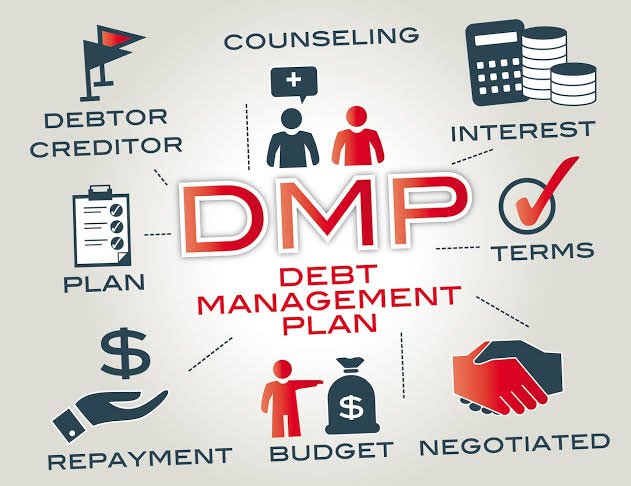
Debt Management Plans (DMPs) Explained: How They Differ From Debt Settlement
A debt management plan (DMP) is a structured repayment program, typically run through a nonprofit credit counseling agency, where you pay back 100% of what you owe — but usually at a lower interest rate, with fees waived, and consolidated into a single monthly payment. Debt settlement, by contrast, aims to pay back less than the full balance by negotiating a reduced lump-sum payoff, often after the account has fallen behind. The two get lumped together constantly in casual conversation, but they operate on almost opposite premises: a DMP is built around paying your debt in full on friendlier terms, while settlement is built around paying less than you owe in exchange for accepting real damage to your credit along the way. Understanding which one actually fits your situation — and which one a company is trying to sell you, since both are marketed under vague terms like “debt relief” — is one of the most consequential decisions in getting out of debt.
Why People Confuse These Two Programs
If you’ve spent any time researching how to deal with credit card debt, you’ve probably seen “debt management,” “debt relief,” “debt consolidation,” and “debt settlement” used almost interchangeably in ads, blog posts, and even some financial advice. That’s not an accident — it’s partly sloppy language and partly the result of an industry where some companies benefit from consumers not understanding exactly what they’re signing up for.
But debt management plans and debt settlement are structurally different products, run by different types of companies, with different effects on your credit, your total cost, and your legal relationship with your creditors. Confusing them can lead to a serious mismatch between what you need and what you sign up for — someone who’s a reasonable candidate for a DMP might get funneled into a settlement program that damages their credit unnecessarily, or vice versa.
This article breaks down exactly what a DMP is, how it works from enrollment to payoff, and where the real differences lie compared to settlement — not just at a surface level, but in the mechanics that actually affect your wallet and your credit report.
What Is a Debt Management Plan?
A debt management plan is a structured program, typically administered by a nonprofit credit counseling agency, designed to help you pay off unsecured debt — credit cards, personal loans, medical bills, and similar obligations — in full, over a set period, usually three to five years.
Here’s the basic mechanism: a credit counseling agency works with your creditors on your behalf and rolls your unsecured debts into one monthly payment, generally aiming to pay off the debt over three to five years. Instead of juggling multiple due dates, minimum payments, and creditors, you send one payment to the agency each month, and the agency oversees the distribution of that amount among your creditors according to a payment schedule they’ve negotiated on your behalf.
The negotiation part is where much of the value lives. On a DMP, your principal balance generally stays the same, but creditors typically agree to stop charging late fees, lower your monthly payment, and reduce your interest rate. That interest rate reduction is often the single biggest financial benefit of the program — credit card APRs in the 20%+ range can sometimes be negotiated down substantially, which can meaningfully shrink both your monthly payment and the total amount of interest you pay over the life of the plan, even though you’re still repaying the full principal balance you originally owed.
Who Runs DMPs
DMPs are typically created and administered by credit counseling agencies. These agencies help reduce outstanding unsecured debts over time by securing a lower overall interest rate, longer repayment terms, or in some cases an overall reduction in the debt itself, and often negotiate directly with creditors on the debtor’s behalf.
It’s worth noting that not every credit counseling agency is a nonprofit, and not every DMP-adjacent service is free. Some agencies charge no fees or minimal fees, while others operate on a for-profit basis and charge higher fees — so “nonprofit” and “credit counseling” aren’t automatically synonymous with “low-cost” or “trustworthy,” and it’s worth vetting any agency you’re considering regardless of its stated tax status.
What a Typical DMP Costs
DMPs are generally not free, even through reputable nonprofit agencies. Most agencies charge a setup fee along with ongoing monthly management fees, which are typically less than $75, though the exact amount depends on state regulations. Many agencies also offer fee waivers or reductions for people who meet certain income qualifications, which is worth asking about directly if cost is a concern — legitimate nonprofit agencies are generally required to make some accommodation for people who can’t afford standard fees.
What Kind of Debt Qualifies
DMPs are built around unsecured debt — credit cards, personal loans, and medical bills are the classic candidates. Secured debts, like a mortgage or auto loan, generally aren’t part of a DMP, since those debts are already tied to collateral and typically have contractual terms that a credit counseling agency has no leverage to renegotiate the way it can with unsecured creditors.
How a DMP Actually Works, Step by Step
1. Credit Counseling Session
The process almost always begins with a counseling session — usually free — where a certified credit counselor reviews your income, expenses, debts, and overall financial picture. This isn’t just a sales formality; a legitimate agency uses this session to determine whether a DMP is actually appropriate for your situation, or whether something else (a stricter budget, bankruptcy, or simply more time) would serve you better.
2. Budget Review and Plan Design
If a DMP looks like a fit, the counselor helps build a budget that accounts for a single, consolidated monthly payment sized to what you can realistically afford, while covering all enrolled debts.
3. Creditor Negotiation
The agency contacts each of your creditors to negotiate the terms of your repayment — primarily interest rate reductions, fee waivers, and sometimes adjusted minimum payments. Because credit counseling agencies negotiate with creditors at scale and often have established relationships and concessions frameworks with major card issuers, they can frequently secure terms an individual consumer negotiating alone would have a harder time obtaining.
4. Single Monthly Payment
Once the plan is active, you stop paying creditors directly and instead send one monthly payment to the agency, which then disburses the appropriate amount to each creditor according to the agreed schedule.
5. Ongoing Repayment
You continue making that consolidated payment for the life of the plan — generally three to five years — until the enrolled debts are paid in full.
6. Plan Completion
Once all enrolled debts are repaid, the plan ends. Because you’ve paid back the full principal (just with reduced interest and fees along the way), there’s no cancellation-of-debt tax issue the way there often is with settlement, since nothing was actually forgiven.
What Is Debt Settlement, for Comparison?
To understand how these two programs differ, it helps to have debt settlement’s mechanics laid out side by side.
Debt settlement is the process of negotiating with creditors to reduce the total amount you owe, then paying off that reduced amount in one lump sum. It often takes significant time to accomplish and carries real risk — it can damage your credit score and, in some cases, drive you further into debt before the process resolves. If you work with a for-profit debt settlement company rather than negotiating on your own, fees can run as high as roughly 25% of the settled amount, charged on top of whatever you’ve already agreed to pay the creditor.
The mechanics of settlement typically work like this: instead of continuing to pay your creditors, you (often through a settlement company) redirect your monthly payments into a separate dedicated savings account. You stop paying your creditors directly, which usually causes your accounts to go delinquent and eventually charge off. Once enough money has accumulated in that account — and often only after your account has become significantly delinquent, since creditors are generally far more willing to negotiate a reduced payoff on a defaulted account than a current one — the settlement company (or you) negotiates a lump-sum payoff with each creditor for less than the full balance.
This is the structural opposite of a DMP in a few critical ways: settlement generally requires you to fall behind on payments (often deliberately) to create negotiating leverage, whereas a DMP is built around staying current; settlement aims to reduce principal, while a DMP keeps principal intact and instead reduces interest and fees; and settlement’s savings happen at the cost of your credit standing during the process, while a DMP is specifically designed to help you avoid that damage.
The Core Differences, Side by Side
1. Do You Pay Back the Full Balance?
This is the most fundamental difference. With a DMP, you repay 100% of your principal balance — the savings come from reduced interest rates and waived fees, not a reduced payoff amount. With debt settlement, the entire point is to pay back less than what you owe, often 40-60% of the original balance (though the exact percentage varies significantly by creditor, account age, and negotiation).
2. Do You Stay Current or Fall Behind?
A DMP is specifically designed to keep your accounts current. You’re still making payments — just consolidated and at better terms — so your accounts generally continue to be reported as paid on time. Debt settlement typically requires the opposite: most settlement strategies depend on your accounts going delinquent, since creditors have little incentive to accept less than full payment on an account that’s being paid as agreed.
3. Impact on Your Credit
The effect of a DMP on your overall credit score varies, but because payments continue to be made and accounts stay current, DMPs are generally far less damaging to credit than settlement. Some agencies note that enrollment itself may be visible on your credit report as a notation, and closing accounts as part of the plan can affect factors like credit utilization and average account age. Still, this is meaningfully different from the credit trajectory under settlement, where the months of missed payments leading up to a settlement — which are often necessary to the strategy itself — typically cause significant, well-documented drops in credit score, on top of whatever additional reporting occurs once an account is settled for less than the full balance.
Notably, even people who just receive credit counseling without formally enrolling in a DMP sometimes see credit benefits. One credit counseling organization has reported that even clients who don’t enroll in a debt management program, but simply receive counseling and financial guidance, see an average credit score increase of around 47 points within two years — a reminder that the counseling and budgeting component of these agencies can have value independent of the DMP itself.
4. Interest and Fees vs. Principal Reduction
A DMP’s savings mechanism is interest rate reduction and fee waivers. Debt settlement’s savings mechanism is principal reduction. Depending on your interest rates, how much debt you have, and how quickly you can save toward a settlement, one of these can end up saving more money than the other — but they’re fundamentally different levers.
5. Timeline
DMPs typically run three to five years, with a fairly predictable payoff schedule once negotiated. Debt settlement timelines vary more widely and are less predictable, since they depend on how long it takes to accumulate enough savings to make offers, how many accounts you’re settling, and how negotiations with each creditor unfold — some accounts settle relatively quickly, others take much longer or don’t settle on favorable terms at all.
6. Fees
DMP fees are generally modest and regulated — typically a setup fee plus monthly fees usually under $75, and often reduced or waived for lower-income participants. Debt settlement fees, particularly through for-profit companies, are typically much higher in dollar terms — up to around 25% of the settled amount — since they’re usually calculated as a percentage of the debt enrolled or the amount saved, which can add up to thousands of dollars on a program covering tens of thousands in debt.
7. Tax Consequences
Because a DMP involves paying back the full principal balance, there’s typically no cancellation-of-debt income and no Form 1099-C to worry about. Debt settlement, by design, involves forgiven debt — and forgiven debt of $600 or more often triggers a 1099-C and potential taxable income, subject to exclusions like insolvency (a topic significant enough to deserve its own separate deep-dive, which is worth reading if you’re specifically comparing tax consequences between these two options).
8. Legal and Collection Risk During the Process
Because DMP participants continue making payments and stay current, the risk of lawsuits or aggressive collection activity is generally low — creditors have little reason to sue someone who’s paying as agreed. Debt settlement, especially in its early phases when accounts are delinquent and no lump sum has yet been offered, carries more exposure to meaningful collection calls, letters, and in some cases lawsuits, since the account is in default during that window.
9. Who Controls the Money
On a DMP, you send payment to the credit counseling agency, which is responsible for distributing it to creditors according to an agreed schedule. On a settlement program run through a company, your payments typically go into a dedicated account (sometimes managed by a third party, separate from the settlement company itself, as required by certain regulations) until enough has accumulated to make settlement offers — meaning your money sits, sometimes for months or years, before it’s actually used to resolve any specific debt.
10. Which Creditors Participate
DMPs generally require creditor cooperation — not every creditor participates in every agency’s program, and terms can vary by creditor. Most major credit card issuers do work with established nonprofit credit counseling agencies, since it’s often in their interest to recover the full balance on more favorable terms than risk a charge-off. Debt settlement doesn’t require the same kind of structured, ongoing creditor relationship — it’s typically a series of individual, one-off negotiations, and not every creditor is willing to settle, particularly on newer or smaller balances.
A Side-by-Side Snapshot
| Factor | Debt Management Plan | Debt Settlement |
| Repay full principal? | Yes | No — negotiated reduction |
| Typical administrator | Nonprofit credit counseling agency | For-profit settlement company (or DIY) |
| Accounts stay current? | Generally yes | Usually no — often requires delinquency |
| Credit impact | Milder; varies but often improves over time | Often significant, especially during missed-payment phase |
| Typical timeline | 3–5 years | Varies; often 2–4 years, less predictable |
| Typical fees | Modest setup + monthly fee, often under $75/month | Can run up to ~25% of settled amount |
| Tax consequences | Generally none | Potential taxable cancellation of debt income |
| Collection/lawsuit risk during program | Low | Higher, especially early on |
| Debt types covered | Unsecured (credit cards, personal loans, medical bills) | Primarily unsecured debt |
Who Tends to Be a Better Fit for a DMP?
DMPs tend to make the most sense for people who:
- Have steady income and can afford a consolidated monthly payment, even if current minimums feel unmanageable
- Are current or only slightly behind on payments, and want to avoid falling further into delinquency
- Primarily need lower interest rates and consolidated payments rather than principal forgiveness
- Want to protect their credit standing as much as possible while paying off debt
- Would rather pay everything they owe, just on more favorable terms, than negotiate a reduced payoff
- Have enough disposable income to realistically pay off the full balance within three to five years once interest is reduced
If your monthly minimum payments are the main problem — not the total amount you owe relative to your ability to ever repay it — a DMP is often the more conservative, lower-risk path.
Who Tends to Be a Better Fit for Settlement?
Debt settlement tends to make more sense for people who:
- Are already significantly behind on payments or facing near-term default regardless of what they do
- Have debt loads that genuinely can’t be repaid in full within a reasonable timeframe, even with reduced interest
- Are willing to accept meaningful, temporary credit damage in exchange for a lower total payoff
- Have some capacity to save a lump sum over time, even if they can’t currently keep up with minimum payments
- Have explored — and ruled out — options like a DMP or bankruptcy and determined settlement is the better fit for their specific numbers
Settlement is generally considered a more aggressive, higher-risk, higher-potential-reward path than a DMP, and it’s usually positioned (by credible sources, not aggressive marketing) as an alternative to bankruptcy for people whose debt-to-income situation is too difficult for a standard repayment plan to realistically resolve.
Where the Two Overlap With Bankruptcy
It’s worth briefly placing both options relative to bankruptcy, since credit counseling agencies often serve as something of a gatekeeper or first stop before that conversation. Sticking to a DMP can help someone avoid defaulting on debt or having to declare bankruptcy altogether, which is part of why many credit counseling agencies position DMPs as a middle path — more structured and effective than struggling along on your own, but less drastic than a bankruptcy filing.
Debt settlement occupies a similar rhetorical space in marketing (an “bankruptcy alternative”), but its risk profile — credit damage, potential lawsuits during the delinquency period, uncertain outcomes with any given creditor, and possible tax consequences — sits closer to bankruptcy’s seriousness than a DMP’s does, even though it doesn’t involve a court filing or a public record the way bankruptcy does.
For someone whose debt truly can’t be resolved through either a DMP or realistic settlement — because income is too low, debt is too high, or both — bankruptcy remains a distinct, separate option with its own trade-offs, including a more complete and often faster resolution, at the cost of a public court record and other consequences.
Common Misconceptions Worth Clearing Up
“Debt management” and “debt settlement” are not interchangeable terms, even though they’re frequently used that way in casual conversation and in marketing from less scrupulous companies. If a company markets itself as helping with “debt management” but its actual process involves stopping payments to creditors and negotiating reduced lump sums, it’s functionally running a settlement program regardless of the label on its website.
A DMP is not a loan. Unlike a debt consolidation loan, a DMP doesn’t involve taking out new financing — you keep your existing debts and simply make a single consolidated payment toward them through the agency, rather than borrowing new money to pay off the old debts. This distinction matters because a consolidation loan changes your creditor (you now owe the loan company instead of your original creditors) and typically requires a credit check and approval, whereas a DMP doesn’t create new debt at all.
Enrolling in a DMP doesn’t mean losing all control over your finances, though it does usually mean you stop using the enrolled credit accounts (most agencies require you to close or stop using cards enrolled in the plan, since continuing to charge on an account being paid down through a DMP would undermine the whole purpose). This is a real trade-off worth knowing about upfront, not a hidden catch — it’s a standard condition of most programs.
Not every credit counseling agency is equally reputable, even among nonprofits. Some agencies charge no or minimal fees, while others — including some structured as for-profit entities — charge considerably higher fees, so it’s worth researching a specific agency’s accreditation, fee structure, and complaint history before enrolling, rather than assuming “nonprofit” alone guarantees low cost or high quality.
A DMP won’t erase debt you can’t actually afford to repay. If your total unsecured debt is high enough relative to your income that even reduced interest rates wouldn’t make monthly payments realistic within a three-to-five-year window, a DMP may not be sufficient, and settlement or bankruptcy may be more appropriate to actually resolve the situation rather than prolong it.
Questions Worth Asking Before Choosing Either Option
Before enrolling in a DMP or a settlement program, it’s worth getting clear, specific answers to:
- What percentage of my total debt will I actually pay back under this program (100% for a DMP, an estimated percentage for settlement)?
- What are all the fees, and how are they calculated — flat, percentage of debt, percentage of savings?
- Will my accounts stay current, or is delinquency part of the strategy?
- How is this likely to affect my credit score, and over what timeframe?
- What happens if I can’t keep up with the monthly payment partway through?
- Are all of my creditors likely to participate or negotiate, or are some unlikely to agree to these terms?
- Is there a chance of lawsuits or continued collection activity while I’m in this program?
- What are the potential tax consequences, if any?
- Is this company accredited by a recognized industry body, and does it have a track record I can verify independently?
A legitimate credit counseling agency should be willing and able to answer all of these clearly, without pressure to enroll immediately. A company that’s evasive about fees, timelines, or the true mechanics of how the program works — DMP or settlement — is a signal worth taking seriously, regardless of how the service is branded.
Frequently Asked Questions
Is a debt management plan the same as debt consolidation? No. A debt consolidation loan involves taking out new financing to pay off existing debts, while a DMP keeps your existing debts in place and simply consolidates your payments toward them into one monthly amount through a credit counseling agency, without any new borrowing involved.
Will a DMP hurt my credit score? The effect on your credit score varies, but because DMPs are built around keeping accounts current, the impact is generally much milder than debt settlement, and many people see their credit improve over the life of the plan as balances go down and payments continue to be made on time.
How long does a debt management plan typically take? Most DMPs are designed to pay off enrolled debt within three to five years, depending on the total balance and the negotiated terms.
Can I include a mortgage or car loan in a DMP? Generally no. DMPs are built around unsecured debt like credit cards, personal loans, and medical bills. Secured debts typically fall outside the scope of what a credit counseling agency can renegotiate through this type of program.
Do I have to close my credit cards to enroll in a DMP? Most agencies require you to stop using — and often formally close — accounts enrolled in the plan, since continuing to charge on those cards would undermine the purpose of paying them down.
Which option saves more money, a DMP or debt settlement? It depends on your specific numbers — your interest rates, total debt, income, and how successfully a settlement program can negotiate reductions. A DMP’s savings come from reduced interest over time; settlement’s savings come from reduced principal, offset by potentially high fees and credit damage. There’s no universal answer — it genuinely depends on the math of your specific situation.
Are debt management plans regulated? DMPs are subject to oversight from the Federal Trade Commission, and individual states also have authority to regulate them to help protect consumers from fraud, though the specifics of state-level regulation vary.
The Bottom Line
The clearest way to keep debt management plans and debt settlement straight is to remember what each one is actually optimizing for. A DMP optimizes for paying back everything you owe, just with friendlier interest rates, consolidated payments, and — ideally — minimal damage to your credit along the way. Debt settlement optimizes for paying back less than you owe, at the cost of accepting real credit damage, some risk of collection activity, and potential tax consequences during the process.
Neither one is universally “better” — they’re built for different financial situations. A DMP tends to fit people who need breathing room on interest and payment structure but can still realistically pay off their full balance. Settlement tends to fit people whose debt has grown beyond what a reduced-interest repayment plan could resolve in a reasonable timeframe. Getting an honest, numbers-based read on which category you actually fall into — ideally from a certified, nonprofit credit counselor rather than a company with a financial incentive to sell you one option over the other — is the single most useful step before committing to either path.